
This newsletter is for your information only and is not a substitute for talking with your psychiatrist, medical doctor, and/or therapist.
Download a PDF version of this issue (223k)

What's Brain Got To Do With It?
Or Your Child's and Teen's
Brain
This article seeks to provide the
reader with an understanding of how new research in neuroscience,
especially on brain development, enlightens our tasks as parents,
therapists and doctors. For this discussion I have drawn much from the
works of Jay Giedd MD, Bruce Perry MD, Daniel Siegel MD, Carol Tamminga
MD, Paul Lombrosa MD, and Time magazine's 5/10/04 cover article
entitled "Secrets of the Teen Brain".
Neither Nature nor Nurture is the
most important determinant of how our lives develop. How we develop is
based on the interplay between Nature (heredity, genetics,
biology) and Nurture (environment, parenting, education, experiences). The
brain's programmed genetic development and our environmental life
experiences interplay causing brain cells (neurons) to grow, to die, to
form new connections, to lose connections, to turn on, and to turn off.
These changes are most pronounced in the womb and during the first three
years of life. Humans achieve their maximum brain cell density between the
third and sixth month of gestation - the culmination of an explosive
period of prenatal central nervous system growth. In the last trimester of
pregnancy many "unnecessary" cells are pruned out. The ability
to change, to be modified, and to develop continues but less so as we get
older. We are born equipped with almost all the neurons we'll ever have.
At birth the infant brain has 100 billion neurons and another trillion
glial (support) cells. Few more neurons will develop in the years to come
but the wiring of connections between nerve cells is yet to stabilize and
reach adult form. The brain has been programmed by genetics to lay out the
best guess of the circuits needed for vision, hearing, language, response
to the environment, sleep, calming, nurturance, learning, physical skills
like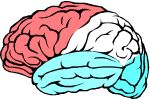 walking, interactions with other people, and so on. Experiences greatly
influence how all this gets refined (developed). We begin with and form
trillions more connections than we can ever possibly use. Based on our
experiences, millions of nerve cell connections are eliminated, kept,
downgraded, or reinforced.
walking, interactions with other people, and so on. Experiences greatly
influence how all this gets refined (developed). We begin with and form
trillions more connections than we can ever possibly use. Based on our
experiences, millions of nerve cell connections are eliminated, kept,
downgraded, or reinforced.
As an example, let's take the
visual cortex. There are 2500 synapses per neuron at birth. This increases
to 18,000 at 6 months, averages 15,000 per neuron at 2 years, continues at
this level till age 10 and is then pruned down through the teens to what
is needed as an adult. Congenital cataracts will inhibit this normal brain
development and cause cortical (brain based, not eye) blindness if the
cataracts are removed too late. Human brain cells are more plastic
(changeable to fit other needs) than other animals but there are still
some sensitive and critical periods, which if not met, permanent deficits
can occur.
Research has shown that if a child is
not played with, interacted with, nurtured, exposed to stimuli, and is
rarely touched it will develop a 25% smaller brain. Another way of saying
this is that an enriched life environment of varied stimulating experience
results in 25% more neuronal connections. Children need, and
the healthy development of a child's brain and chance to reach his or her
full human potential requires, hands on involved parenting,
cuddling, talking to, interactions, and stimulating experiences. These
experiences cause neurons to react, which in turn, activates the gene that
codes for making the protein needed to connect that neuron to another and
another. The connections between these neurons are now a group or a
circuit. Experiences thus shape and reshape the structure of the brain.
We thus develop a unique brain with our own mind, emotions, thinking
style, temperament, personality, and reaction patterns.
Memory is also becoming better
understood. The mind is able to generate a pattern of neural firing at the
time of seeing an object with the eyes or by instead imagining it with the
mind. Remembering is not pulling a book from the library or a file from a
computer nor is it merely the reactivation of a prior experience (sight,
smell, touch, feeling, emotion, thought, event, etc); but rather it is the
construction and firing of a new neuron group containing features of the
prior  "image"
and elements of "memory" from other related experiences as well
as influences from the present state of mind. Memory is simply the odds
that a certain group of neurons will fire again together. The
"gist" of a situation may be remembered with great accuracy, but
the details may be subject to unconscious bias from ongoing experience.
Recollection can be extremely accurate. Recollection can also be
susceptible to ongoing unconscious influences by other past, present, or
future social and personal experiences.
"image"
and elements of "memory" from other related experiences as well
as influences from the present state of mind. Memory is simply the odds
that a certain group of neurons will fire again together. The
"gist" of a situation may be remembered with great accuracy, but
the details may be subject to unconscious bias from ongoing experience.
Recollection can be extremely accurate. Recollection can also be
susceptible to ongoing unconscious influences by other past, present, or
future social and personal experiences.
If your child experiences abuse,
molest, neglect, domestic violence, put-downs. yelling, screaming, and the
chaos of parental conflict, alcoholism, or drug addiction then connections
become hardwired into the brain to respond to all current and future
experiences as if the dangers of fight, flight, and despair were always
present here and now. A brain that is bathed in drugs, alcohol, or
nicotine in utero; by the youth using such substances too young; by the
overproduction of stress hormones due to excessive exposure to life
stressors, traumas, chaos, or other maltreatment; this brain becomes
pre-wired to respond to all of life with depression, anxiety,
dissociation, or hyper-arousal over-reactions. Abused kids develop central
nervous systems exquisitely tuned to danger. Studies show that chronic
stress causes chronic overproduction of hydrocortisone, related
glucocorticoids, and catecholamines that cause actual damage to neuronal
connections (dendrites) which atrophy (shrink) in the hippocampus area of
the temporal lobe, an area key in many cognitive skills including memory.
Fortunately, the effects of short-term stress is reversible. After
long-term stress, however, the neurons begin to die. If, however the child
experiences nurturance, good nutrition and health, and is exposed to a
broad range of developmentally appropriate challenges and stimulation your
child's brain will keep and make connections that reinforce these adaptive
abilities. This is why such things as learning a second language, riding a
bike, swimming, learn to play a piano, or to throw a ball are easier when
young and can last a lifetime.
Human brain size changes little over
the child and teen years. By the time a child is 6, his brain is 90 to
95 % of adult size. Between the ages of 6 and 12 the neurons grow
bushier by each neuron adding dozens of connections based on what is
reinforced by learning and experience. These gray matter (nerve cells),
emotional, sensory, and coordination pathways grow via reinforced
dendrites and axons to reach their next peak at 11 in girls and 12 to 13
in boys. Unused connections are further pruned out in the teen years at
the same time Myelin Sheath cells, the white matter protective coating
around neurons, increases resulting in a more limited set of neuron
pathways but faster more powerful nerve impulses. The brain is becoming
more efficient but also losing some of its raw potential for learning and
ability to recover from trauma such as drugs, alcohol, or injury. This
pruning is guided both by genetics and an experience based "use it or
lose it" mechanism. Synapses that are used often are kept and even
reinforced. Those that are not used are lost - how you spend your time and
the experiences you have or don't have are critical. Consider the
relative values of developing skills in music, sports, memorization, horse
riding, languages, writing and reading, dancing, gymnastics, and
spirituality versus skills in unbridled violence, video games,
experiencing war, disaster, homelessness, getting high, abuse, neglect,
deprivation, or malnutrition. Think of the potentially valuable brain
circuitry lost or not developed! Think of the possibly detrimental
circuits created instead!
Brain development proceeds from the
back of the brain (cerebellum, visual occipital cortex) and deep
(brainstem, thalamus, basal ganglia) sections toward the top (parietal and
temporal lobes of the cortex) and lastly the front (the frontal lobes are
located just behind the forehead). This means the part of the brain most
important for "Executive Functions" like planning,
breaking plans or project into steps, carrying out each step, and then
bringing all the steps together into a coherent whole, organizing oneself,
making well thought out decisions, controlling impulses, and using good
judgment are the last to develop. The last part of the brain to
grow up is the part capable of deciding "I'll do my homework first
and take out the garbage and then I'll IM my friends". The part of
the brain that makes teens responsible is still under construction.
The frontal and pre-frontal cortex
also plays an important role in motivation. Partial development
here in teens leads to the often observed propensity for teens to engage
in behaviors that are either very exciting or very low effort, or both.
Thus immediate and tangible results will make more sense to your teen.
Losing his cell phone, car, or computer access for an alcohol violation
means far more to him or her than a future on skid row.
The teen and college student's
notoriously late sleep schedule shifted toward going to sleep in
the wee hours of the morning and preferentially rolling out of bed about
noon is partly promoted by the Pineal gland at the base of the brain
putting out its sleep readiness hormone Melatonin later in teens.
Note that the ages of 11 to 15
are marked both by incomplete frontal cortex impulse control at the same
time as hormones are kicking our children into puberty and
adolescence. In the past the semi-rational thinking and emotional roller
coaster of the preteen and early teen years were written off to hormones. Now
we understand that although hormones do play a role and do affect the
brain, the main explanation for this lability and moodiness is brain
development, or as some would say, the lack of brain development. This
interplay of faster neuronal connections and new social, psychological,
and biological drives propel our youth toward an appetite for (or fear of)
thrills, strong sensations, excitement, adventures, novel experiences, and
impulsive behaviors that can be both adaptive and dangerous. The part
of the brain that puts the brakes on such risky impulsive behavior is
still under construction. It is evident, then, that anything that can
increase impulsivity and lessen inhibitions, such as alcohol, drugs, peer
pressure, mental illness, and powerful new experiences like fast cars or
new drugs, or libido or bravado, can raise the risks.
The adolescent brain's
propensity for uninhibited risk taking propels teens toward healthy
independence via a willingness, even excitement, to try new things. This
often includes sex, drugs and alcohol. The very immaturity of the teen
brain makes it more vulnerable to the stimulating, damaging, and addicting
effects of nicotine, alcohol, and other drugs. Almost 45% of kids who
start drinking alcohol by 13 will become alcoholic, while only 10% of
those who wait till 21 will. One in three teens who start smoking as a
teen will die of a tobacco related disease. Ninety percent of adult
smokers began as a teen. Addiction with all its health,
psychiatric, legal and family costs comes more often and more severely to
persons who start using as teens (or younger). Drugs, alcohol, nicotine,
and the environments kids use them in, can cause permanent changes to the
brain. The still developing brain is simply more easily and severely
damaged by bathing it in such toxins.
These insights based on brain
development help explain the main causes of death amongst our youth from
Middle School through College age. The main cause of death in youth is
accidents - by far most fatal accidents are motor vehicles and most of
these involve alcohol and other drugs. #2 is suicide and #3 is homicide,
both of which also often involve substance abuse. These 3 causes of death
account for 75% of all deaths in our kids. All other causes (cancer,
heart disease, AIDS, infections like pneumonia, etc) account for only 25%.
Please also remember that when young people drink it is usually to get
drunk. Youth do not just have a glass of wine with dinner or a beer while
watching the game; they binge - drink as much as possible as fast as
possible to get drunk or worse.
Contrary to prior concern, research
shows that stimulants like methylphenidate (the medicine in Ritalin and
Concerta) actually enhance, not harm, the brain development of kids who
have ADHD. Furthermore, anticonvulsant medicines, lithium, and perhaps
atypical antipsychotics can have neuro-protective (brain health preserving
or enhancing) effects for those who need them.
It's no accident that car insurance
rates drop big-time at age 25 and that car rental agencies decline
drivers under that age. The Insurance Institute for Highway Safety reports
teens are 4 times as likely to be in an accident and 3 times as likely to
die in an accident than older drivers. Studies on brain development
confirm that the prefrontal cortex region of the brain that inhibits risky
behavior doesn't mature till about 25. This is especially obvious when the
youth is distracted by cell phones, music, eating and drinking, and worst
of all - having peers in the car. Boys mature, on average, one to three
years later than girls. Twenty-five is probably the best estimate for
when the brain is reasonably fully mature in most of us.
It is helpful to remember that a wide
range of positive life experiences combined with good nutrition, exercise,
adequate sleep, clean air, clean water, and the sense that there exists
more important things than our own self interest all promote healthy
minds, bodies, spirits, and brains.